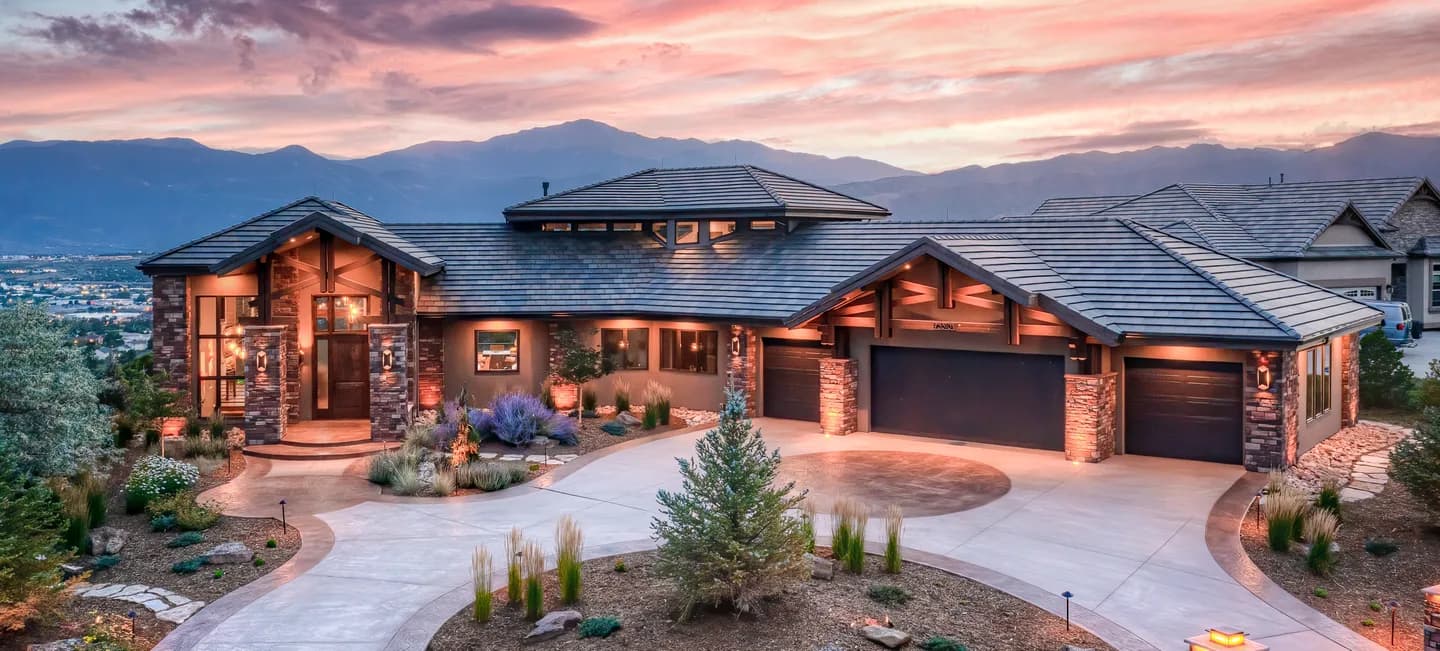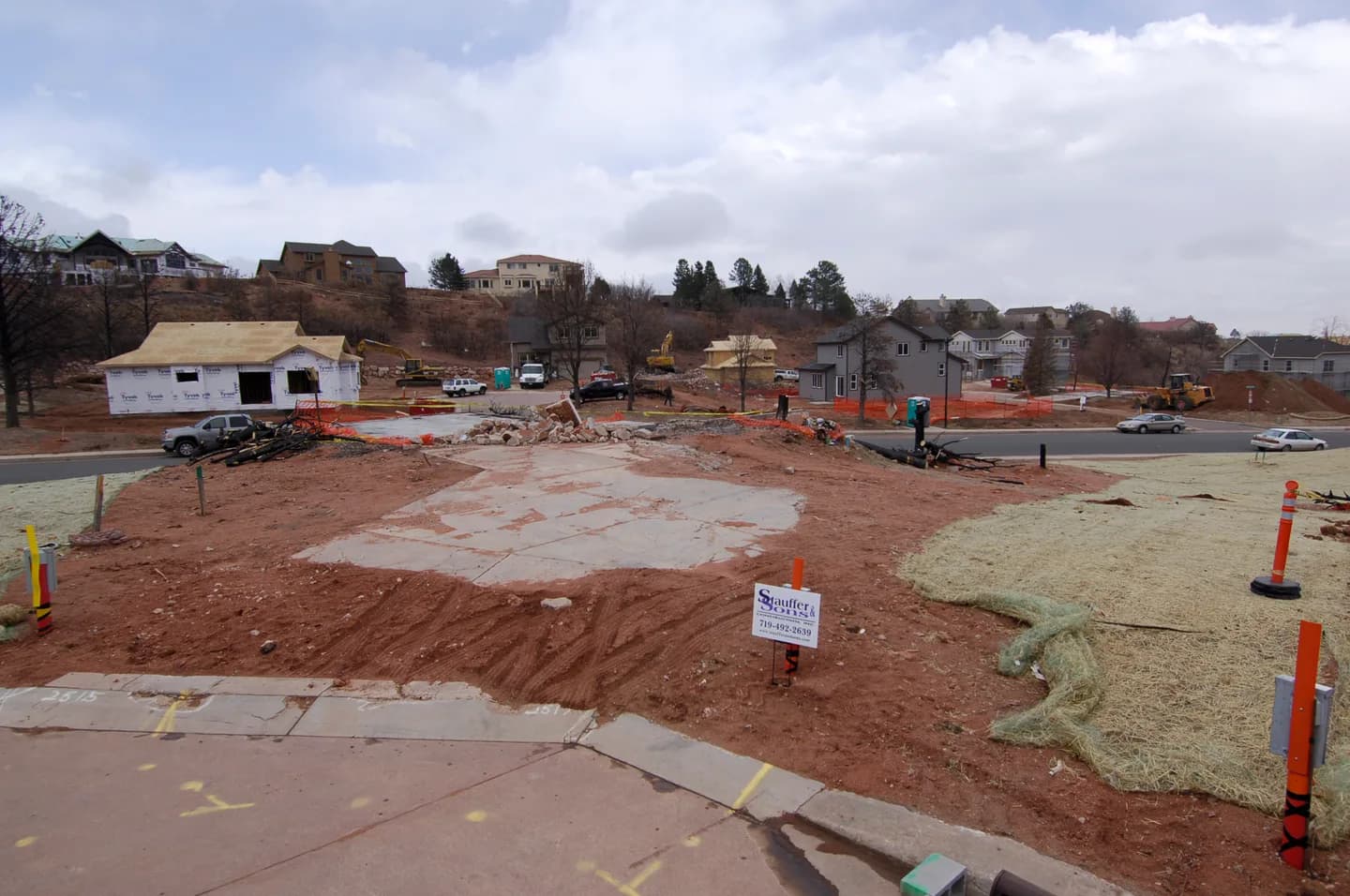
The short answer: while your home is under construction, three policies matter. Your builder carries general liability and, on our contracts, a builder's risk policy on the structure itself. You carry your own course-of-construction (or homeowners) policy for the land, your liability on it, and anything you store on site, and it converts to a standard homeowners policy at the certificate of occupancy. Before any of that, and before you go under contract on a lot, call your agent and confirm the land is insurable at a premium you can live with, because in Colorado wildfire scores and hail history now decide that more than the house does. Once you move in, insist on replacement cost coverage, never actual cash value, and read the exclusions: soil movement and flood are not in a standard policy here.
This article started in 2014 as a guest post from a Colorado Springs insurance agent with 27 years in the business. I have rewritten it from the builder's side of the table, with what has changed in Colorado since: the wildfire-score disclosure law that took effect in July 2026, the state FAIR Plan, and a hail market that has roughly doubled premiums on the Front Range.
Make sure the lot is insurable before you buy it
The biggest insurance mistake I see is not a bad policy. It is nobody asking about insurance until the lot is already purchased and the plans are drawn. The agent who wrote the original version of this piece told the story of a physician who had run every policy he owned through one carrier for years, made an offer on a house, put down earnest money, and only then learned that carrier would not write it. Underwriting had a problem with the location, and loyalty had nothing to do with it. He shopped for weeks and the policy he finally found cost four times what he had budgeted.
In 2026 that story plays out around wildfire risk. Most carriers now score every address with a wildfire model, and in Black Forest, the Woodland Park and Divide area, parts of Monument, and the hillside neighborhoods on the west side of Colorado Springs, that score can move a quote by thousands of dollars a year or produce a decline. Colorado's HB25-1182, in force since July 1, 2026, requires admitted insurers to tell you your wildfire risk score in writing, let you appeal it, and credit documented mitigation work. That is a real improvement, but it does not cap premiums, and it does not apply to surplus-lines carriers.
So before you sign a land contract, give your agent the parcel address and ask two questions: can you write it, and roughly what will it cost? If the answer is three declinations, the Colorado FAIR Plan exists as a last resort, but understand what it is: a bare-bones fire policy with a dwelling cap, actual cash value settlement, and no liability or living-expense coverage. It is a backstop, not a plan. Knowing you would land there is a reason to keep looking at lots, or to design a home that changes the underwriting answer.
Your builder's insurance covers your builder, not you
I hear "my builder has insurance" from almost every client, and it is true, but it answers a different question than people think. A licensed builder carries general liability and workers' compensation. Those protect the builder, our subcontractors, and anyone injured by our work. On a Stauffer & Sons contract we also carry builder's risk on the structure, which covers the house itself during construction: wind taking a wall down before it is braced, hail on a roof deck, a theft of materials, vandalism. Some lenders and some builders put builder's risk in the owner's name instead. Ask which it is on your project and get it in writing, because your lender will want proof of coverage before the first draw.
What none of that covers is you. You own the land from the day you close on it. If someone wanders onto the site on a Sunday afternoon and gets hurt, that liability lands on the landowner. If you have a storage container on the lot with the fixtures you bought early, those are your belongings, not ours. The policy for this is called a course-of-construction or builder's-risk-for-owners policy, depending on the carrier. It covers premises liability on the land and your personal property on site, and at the certificate of occupancy it converts into your homeowners policy. It is not expensive, and your agent should be able to write it the week you close on the land.
One clarification that came up in the comments on the original article: if you are buying a semi-custom or production home and the builder owns the lot until closing, you generally do not need this policy, because you do not own anything yet. It applies when the land is in your name while the house is being built, which is how every custom home we build works.
A new home is cheaper to insure, but not the way it used to be
The good news still holds: insurance companies like new houses. New wiring, new plumbing, a new roof, and current code mean fewer claims, and most carriers still give a new-home discount that steps down over the first decade or so. The 80 percent first-year discounts the original article mentioned are gone, though. Colorado's homeowners premiums have roughly doubled since then, and the state Division of Insurance's own carrier survey found hail, not wildfire, is the main reason. The average Colorado premium now sits somewhere north of $4,000 a year, and nearly every Front Range policy now carries a separate wind and hail deductible that is a percentage of the dwelling coverage, typically 1 to 5 percent. On a million-dollar home that is a $10,000 to $50,000 deductible on a hail claim. Read that line before you sign.
Build the discounts in while the house is still on paper
This is the part a builder can actually help with. The decisions that lower your premium are design decisions, and they are cheap on paper and expensive after the fact.
- A Class 4 impact-resistant roof. On the Front Range this is the single biggest premium lever we control, and several carriers will not write a new home on anything less. Ask for the discount in writing when you get your quote.
- Non-combustible exterior. Stucco, stone, fiber cement siding, and metal or Class A roofing earn hail and fire credits and, in Black Forest and the mountain communities, are increasingly required by the wildland-urban interface code anyway.
- Ignition-resistant details. Ember-resistant vents, enclosed eaves, metal gutters with guards, a five-foot non-combustible zone around the foundation, and defensible space out to 30 and 100 feet. These are what the wildfire models look for, and under the 2026 law a documented mitigation package is now something you can hand your insurer and expect a credit for. The IBHS Wildfire Prepared Home designation is the cleanest way to document it.
- A whole-house water shutoff. A leak sensor that closes the main valve costs a few hundred dollars installed and prevents the most common large claim in a modern house, which is water, not fire.
- Monitored alarm and fire sprinklers. Smaller discounts, but they add up, and sprinklers change the conversation with some wildfire underwriters.
Colorado's new Strengthen Colorado Homes program, created in 2026, is also starting to fund roof fortification grants for existing homes. It will not help you on a new build, but it tells you where the insurance market is heading: carriers want fortified roofs, and they are willing to pay for them.
Replacement cost, not actual cash value
An actual cash value policy pays what your property was worth the day it was destroyed, depreciated for age. Twenty-year-old carpet is worth almost nothing on paper, so a carpet claim pays almost nothing. The same logic applied to a roof is why so many Colorado homeowners get a hail check that does not cover a new roof. We rebuilt more than twenty homes after the Waldo Canyon and Black Forest fires, and underinsurance was the most common hardship we saw: families who thought they had full coverage and discovered the dwelling limit had not kept up with construction costs, or that contents were on an ACV schedule.
Ask your agent for these, by name:
- Replacement cost on the dwelling and contents, with no ACV schedules buried in the roof or contents sections.
- Extended or guaranteed replacement cost, which pays above the dwelling limit when construction costs spike after a regional disaster. After Black Forest, every builder in town was booked and prices moved. This endorsement is what protects you from that.
- Ordinance or law coverage, which pays the cost of rebuilding to today's code rather than the code your original house was built under. On a rebuild this can be tens of thousands of dollars in sprinklers, energy code, and wildfire details.
- Debris removal and tree removal limits high enough to matter. Clearing a burned foundation and a few acres of dead ponderosa is a real line item, and the default sublimits are small.
What a Colorado homeowners policy usually does not cover
Every policy has exclusions. These are the ones that bite in the Pikes Peak region:
- Earth movement. Expansive soils are the defining engineering condition of this area, and soil movement, settling, and heave are excluded from standard policies. That is why we spend money on soils reports, engineered foundations, and floating walls before we spend it on finishes. The policy will not save you later.
- Flood. Surface water is excluded unless you buy a separate flood policy through the National Flood Insurance Program or a private carrier. Burn scars change drainage for years, and lots below the Waldo Canyon scar learned that in 2013.
- Sewer and drain backup is an endorsement, not a default. Cheap. Buy it.
- Earthquake is excluded. Rare here, but not unheard of.
- Dogs, trampolines, and hot tubs may be excluded from liability by breed or by item. If you own one, say so.
Keep the policy current, and keep proof
You are covered for what the contract says, not what you assumed. The original author told two stories worth repeating. A Black Forest fire client asked about his collectible 1967 Mercury Cougar after the garage burned, and in twelve years as a customer he had never mentioned the car, so it was not scheduled and not covered. A Waldo Canyon client had an expensive living room set and no receipts, but her agent had filmed a walkthrough of the house years earlier, showed the adjuster the footage, and the claim was paid in full.
The practical version of that advice is simple. Walk your finished house with your phone, film every room and open every closet, and store the video somewhere that is not in the house. Schedule jewelry, firearms, art, and collectibles separately, because standard policies cap them at a few thousand dollars. And call your agent when something changes: an addition, a detached shop, a new vehicle in the garage, a finished basement. Review the dwelling limit against current construction costs every couple of years. In this market, a limit set in 2020 is not enough to rebuild in 2026.
If you are weighing a specific lot and want to know how it will insure, that is part of the homework we do with clients before they buy. Have a look at how our process works, or if you are rebuilding after a fire, start with our fire rebuild guide.